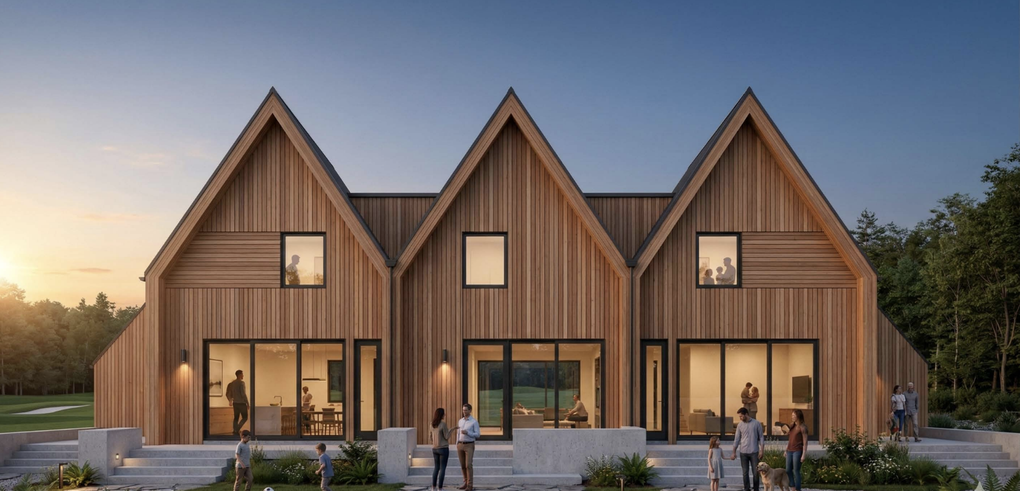
It's a question worth asking directly: can architecture make people healthier, happier, more connected? The answer, increasingly supported by research and real-world experimentation, is yes — but only if we design for it intentionally. The built environment shapes behaviour, mood, and social connection in ways that are both subtle and profound. Most housing is designed around minimum viable standards. The most interesting work happening today is designed around maximum human flourishing.
Linebox Studio is currently in the early research phase of a new development project centred precisely on this question. We're exploring what 'light-touch, human-centred' architecture can mean today: materials that age well and improve with time, spatial layouts that encourage connection without removing privacy, systems designed for adaptability as households change over decades. We're drawing on exemplars like Living Places Copenhagen — a brilliant model of how real-life testing and architectural experimentation can reshape the way we think about residential design.
The fundamentals matter enormously here. Natural light isn't a nice-to-have, it's a primary health determinant. Acoustic quality shapes stress levels and sleep. The presence or absence of outdoor space, shared amenities, and well-designed thresholds between public and private life all have measurable effects on how people experience their homes. The best residential architecture takes all of this seriously and considers it as a coherent spatial thesis about what it means to live well.
As housing supply becomes the defining urban policy challenge of this decade, there's a real risk that quantity crowds out quality. We'd argue the false economy is obvious: buildings that don't support the wellbeing of their residents cost more in the long run; in social services, in turnover, in the erosion of neighbourhood quality. Designing for human flourishing isn't a luxury tier of housing. It's the right baseline.